The numbers reflect that shift. The 2025 CGI and BAFT Trade Technology Survey expects traditional trade products to account for 39% of trade revenue within five years, down from 50% today,
1 while open-account and supply-chain finance are projected to rise from roughly 26% to more than 32%.
At the same time, the Asian Development Bank estimates the global trade finance gap at $2.5 trillion.
2
For banks, the opportunity is significant. But so is the complexity of managing relationships that spans multiple products, markets, volumes, pricing structures, and changing customer needs.
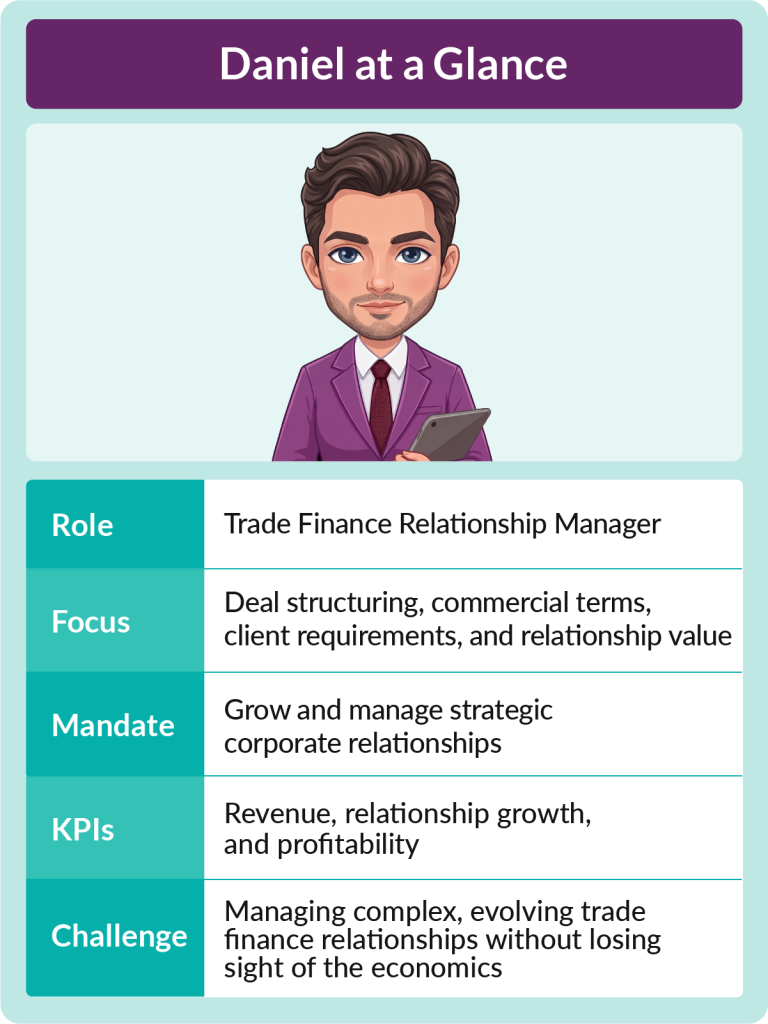
For Daniel, winning the mandate is only the first milestone.
The bigger question is: can the bank continue to deliver what the customer needs without losing control of what the deal is worth?
Then the Customer Changes the Plan
Six months into the relationship, the client’s requirements start to change. Trade volumes in one market are higher than expected. A new trading corridor is being added. The client wants additional packing credit to support working-capital needs. An LC is amended. Other trade instruments are seeing higher or lower utilization than originally expected. And the customer asks Daniel to revisit some of the commercial terms as part of the changing relationship.
These changes may seem incremental. But together, they can change the structure, usage, and economics of the original deal.
A new market could introduce different risk and pricing considerations. Additional financing could alter the overall relationship value. A concession on one instrument could have implications for profitability elsewhere.
For Daniel, that means the job is no longer simply to manage the relationship he originally won. He now needs to manage how that relationship is evolving.
The complexity increases because different parts of the bank may handle different pieces of the relationship. One system processes an LC amendment. Another manages financing. A separate workflow handles approvals. Billing eventually applies the relevant charges.
But Daniel needs to see how all those changes connect back to the deal he originally negotiated. Daniel needs the commercial view.
Managing the Deal: From Agreed Terms to Realized Value
The changes are now in motion. Daniel needs to make sure the commercial agreement keeps pace with them. The new trading corridor needs to be incorporated into the relationship, with its own pricing and risk considerations. The additional packing credit needs to be incorporated too. The amended LC needs to reflect the revised terms. Changes in volume and utilization need to be tracked against commitments. Any pricing exceptions need the right approvals. And once changes are agreed, the updated terms need to reach the teams and systems responsible for execution.
For Daniel, this means staying on top of more than individual transactions. He needs to manage the connection between what was agreed, what has changed, and what the bank is executing.
This is what moves Deal Management beyond an approval workflow. A connected Deal Management approach enables Daniel to manage the evolution of the deal as one connected commercial relationship, responding to the customer while keeping execution aligned with what the bank agreed.
The Trade Finance Deal is a Journey, Not an Event
The trade finance relationship does not end when the contract is signed. It evolves with the customer. New markets. New instruments. Changing volumes. Amendments. New financing requirements. Commercial exceptions.
The challenge for the bank is to adapt to the customer needs without losing the commercial thread that connects every change back to the original deal.
Here is where a robust Deal Management platform can make a difference. By connecting deal terms, commitments, changes, approvals, and execution, it gives relationship teams the context to respond to customer demands, approvers the visibility to make informed decisions, and the business a clearer view of how the relationship is performing against its commercial objectives to ensure profitability.
For Daniel, the goal is not simply to manage more trade finance transactions. It is to manage the relationship behind them, adapting to what the customer needs while keeping every change connected to the economics of the deal. Because winning the trade finance relationship is only the beginning. The real value comes from managing it well as it evolves.